Visual art
My Art Ideas Portfolio for the Certificate III in Visual Art, in my own words from the original Other Brief site. Tap an image to see it larger.
Romanticism
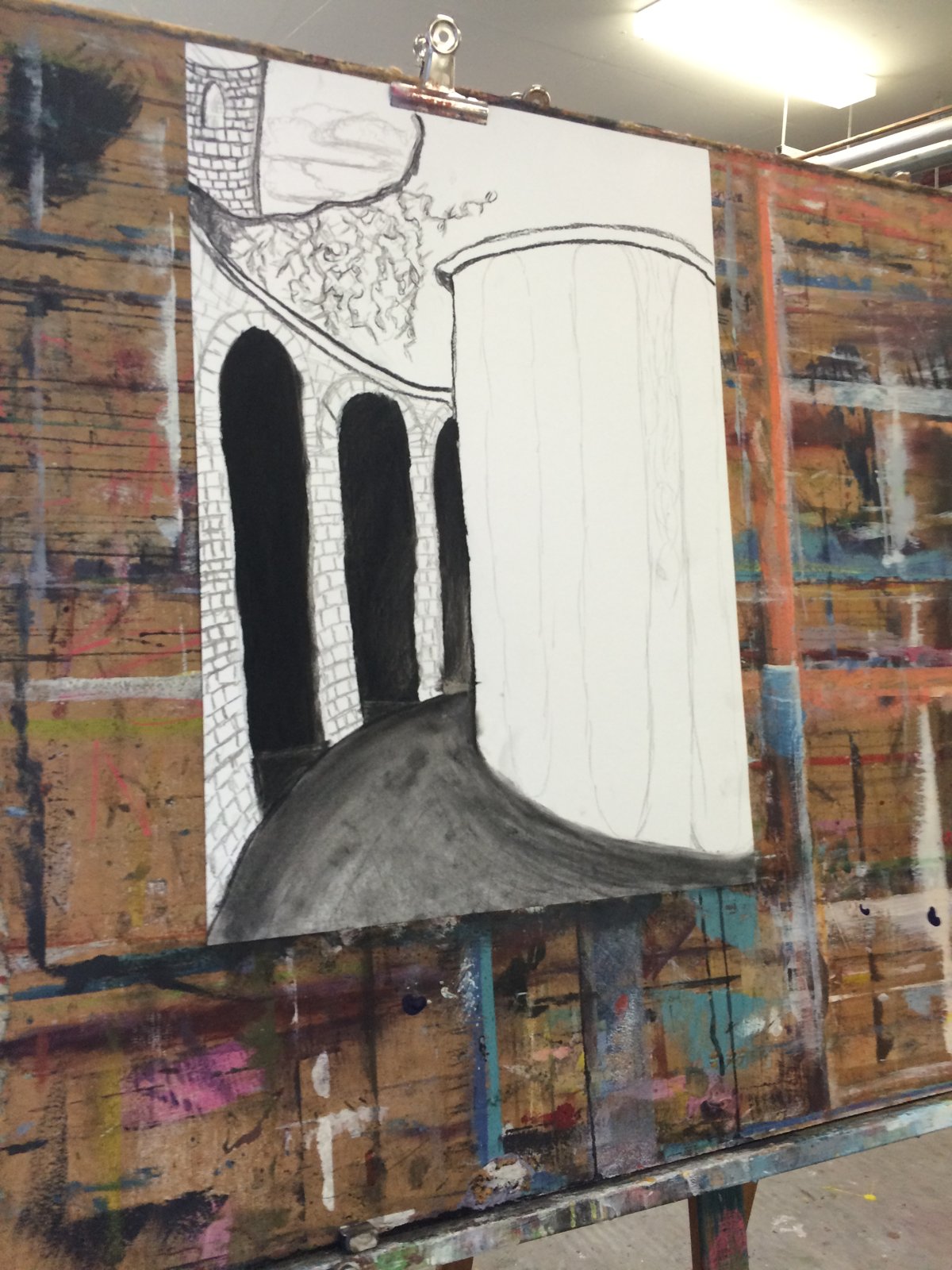
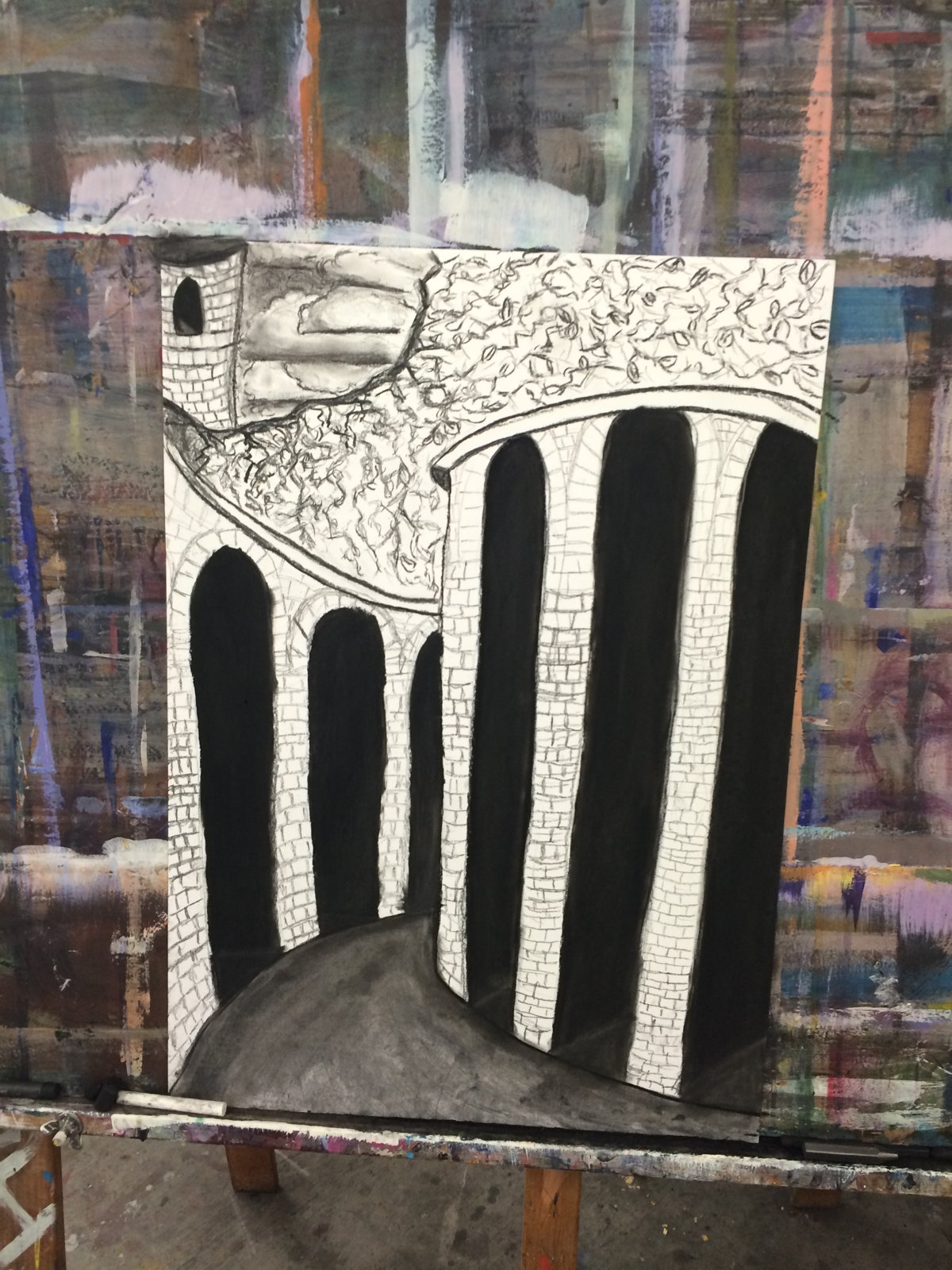
The first period of art history we looked at was Romanticism and for inspiration I looked at the artist Hubert Robert’s work dating from the 1780s, ‘El Coliseo de Roma.’ or ‘The Colloseum of Rome’. It is a clear example of what the Romanticists termed ‘The Ruin’ which typically depicted a classical building falling to pieces, with nature shown idyllicly taking over.
Robert’s work has had a notable influence on my invented drawing, indeed the curving passage, looming archways and hole in the rooftop revealing a peak into the outside world are all stolen elements. To create this work I used a combination of vine charcoal, compressed charcoal, white chalk and and eraser to pull back specific areas, and the in-process and finished product work are seen here. An, admittedly crude allusion to nature overtaking the building is seen in the vines that cover the ceiling, and a particularly classical romantic image is that of the turret seen the hole in the roof, vaguely reminiscent of Rapunzel’s tower.
Expressionism
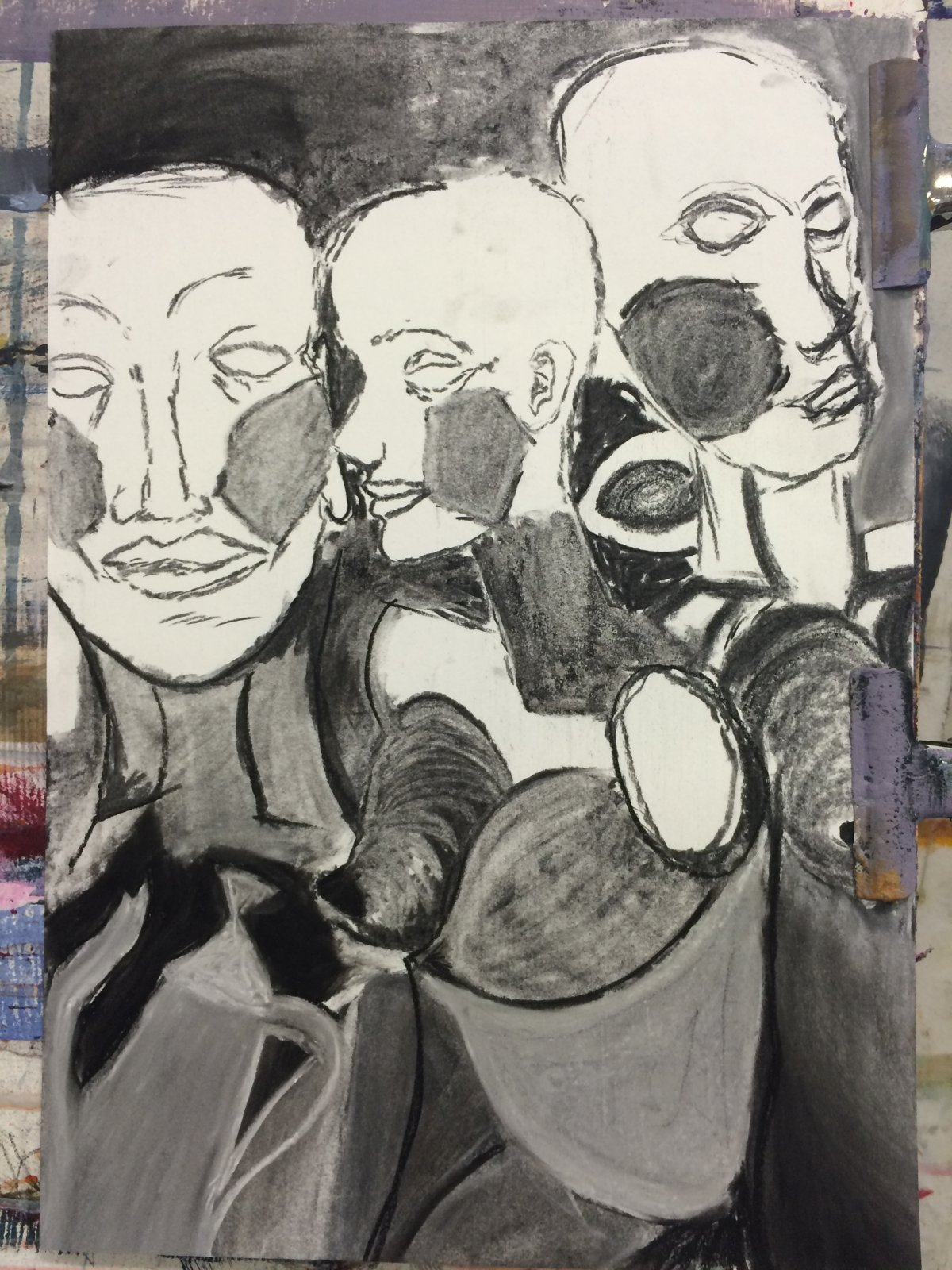
When we looked at Expressionism, distributed amongst us were a variety of images from Franz Xaver Messerschmidt. ‘The Yawner’, a tin cast of what could be interpretted as either yawn or scream. I found this work reminiscent of the image of the infamous ‘Silent Scream’ from Bertolt Brecht’s production of Mother Courage, rooted in the same Era.
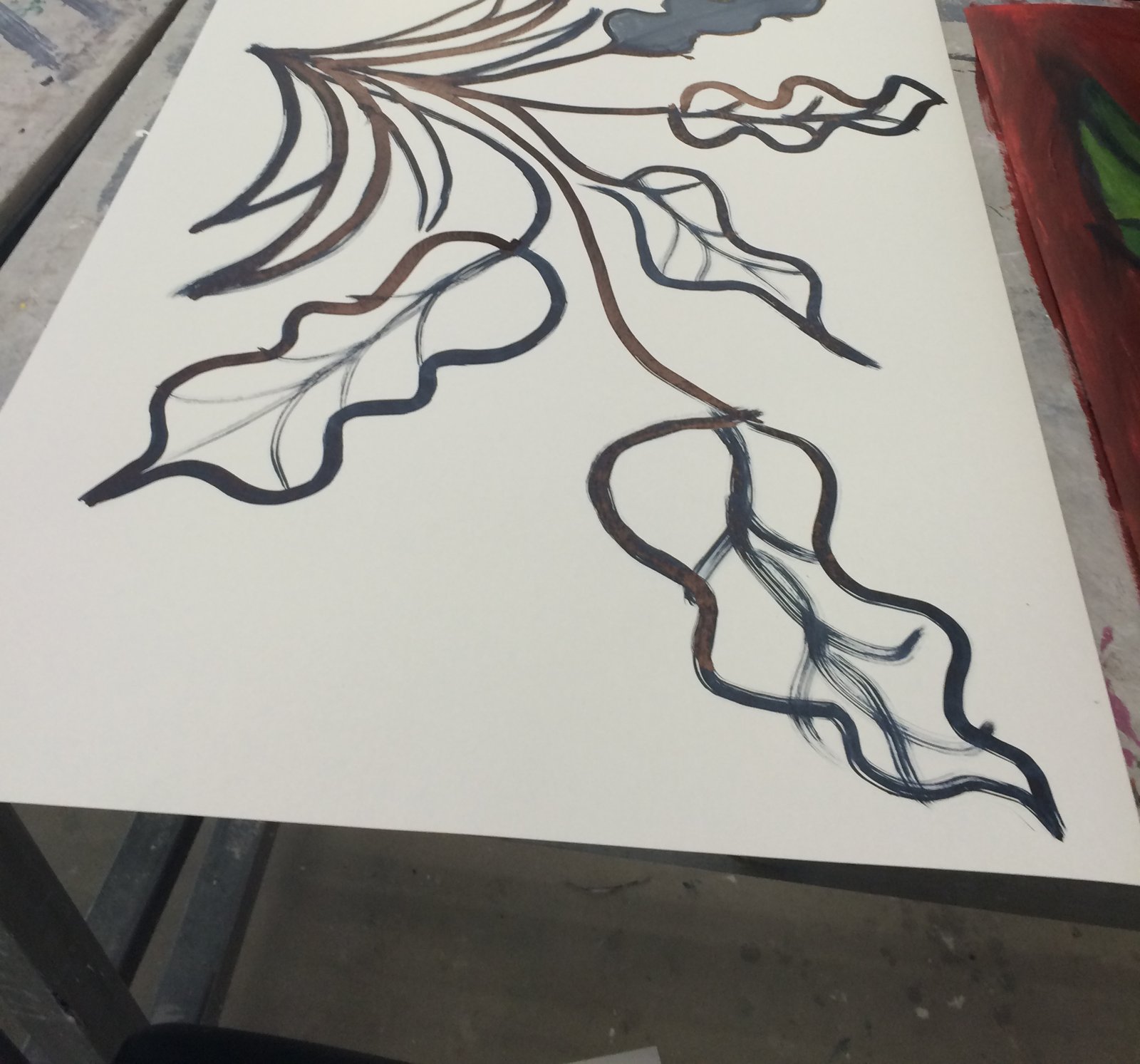
Here you can see my response to these two artworks from different disciplines in the German Expressionist movement. Using black ink applied with a handmade brush made from a whittled twig, and a flat brush for larger areas on ink, I created my work, retaining some of the underlying pencil markings to allude to movement.
I also highlighted the subjects senses (sight, smell, taste) through the use of red ink, which is also an indicator of blood and therefore pain.
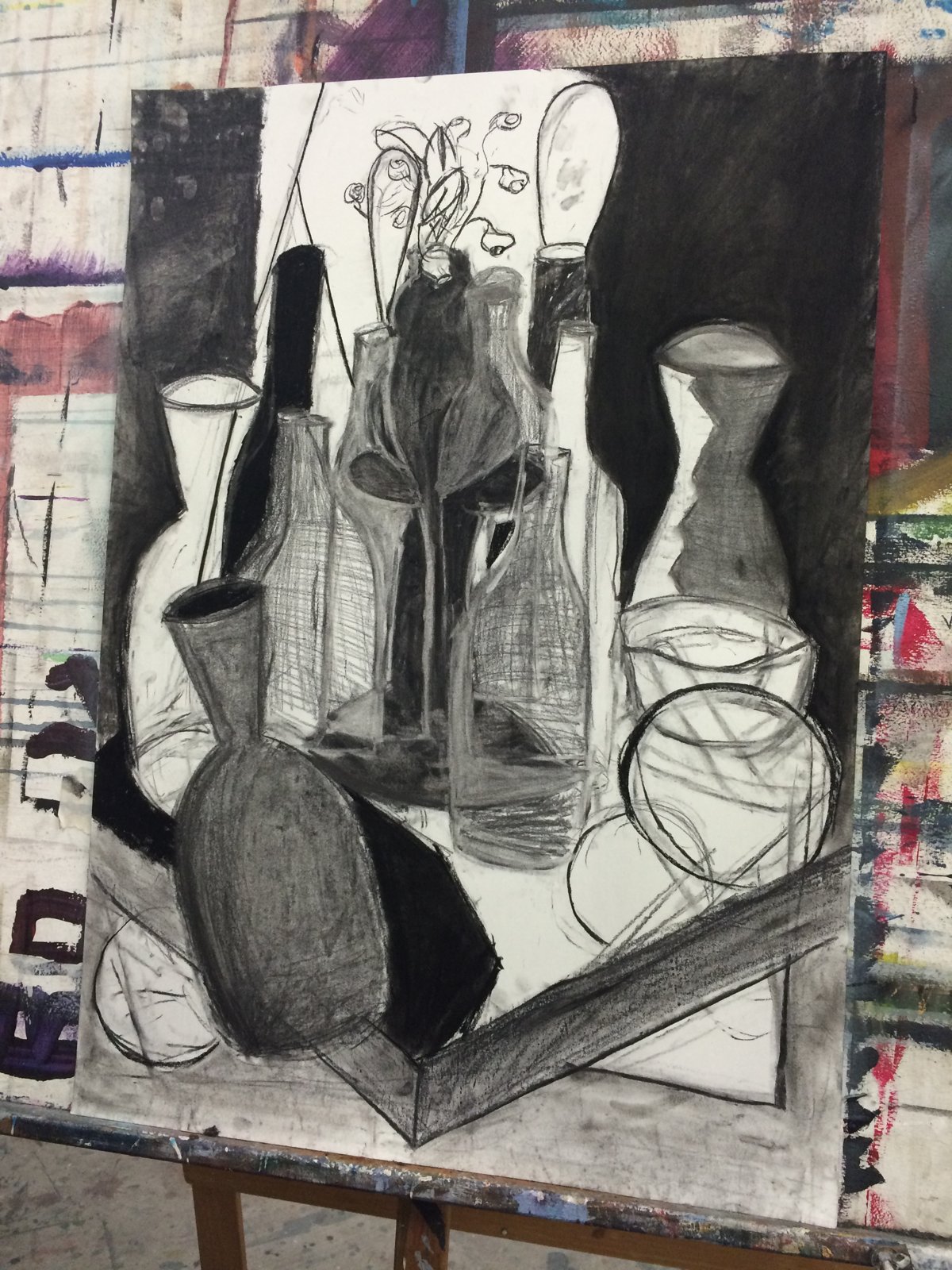
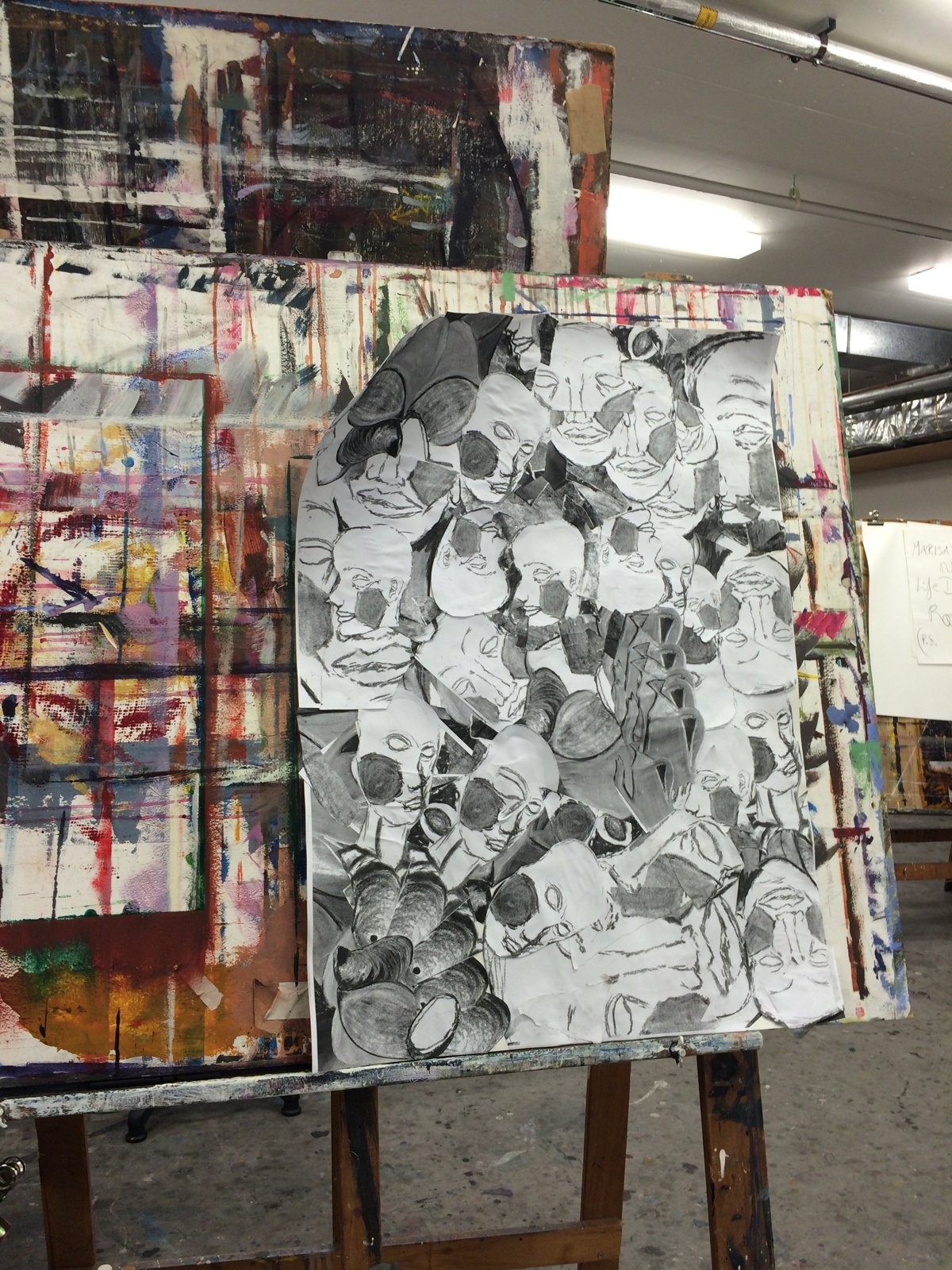
Cubist construction drawing
For my Cubist Construction Drawing, I drew two still lives of different subjects from three different angles using charcoals. I then proceded to deconstruct my still life by scanning the drawing, before fragmenting it through collage.
Futurist propaganda poster
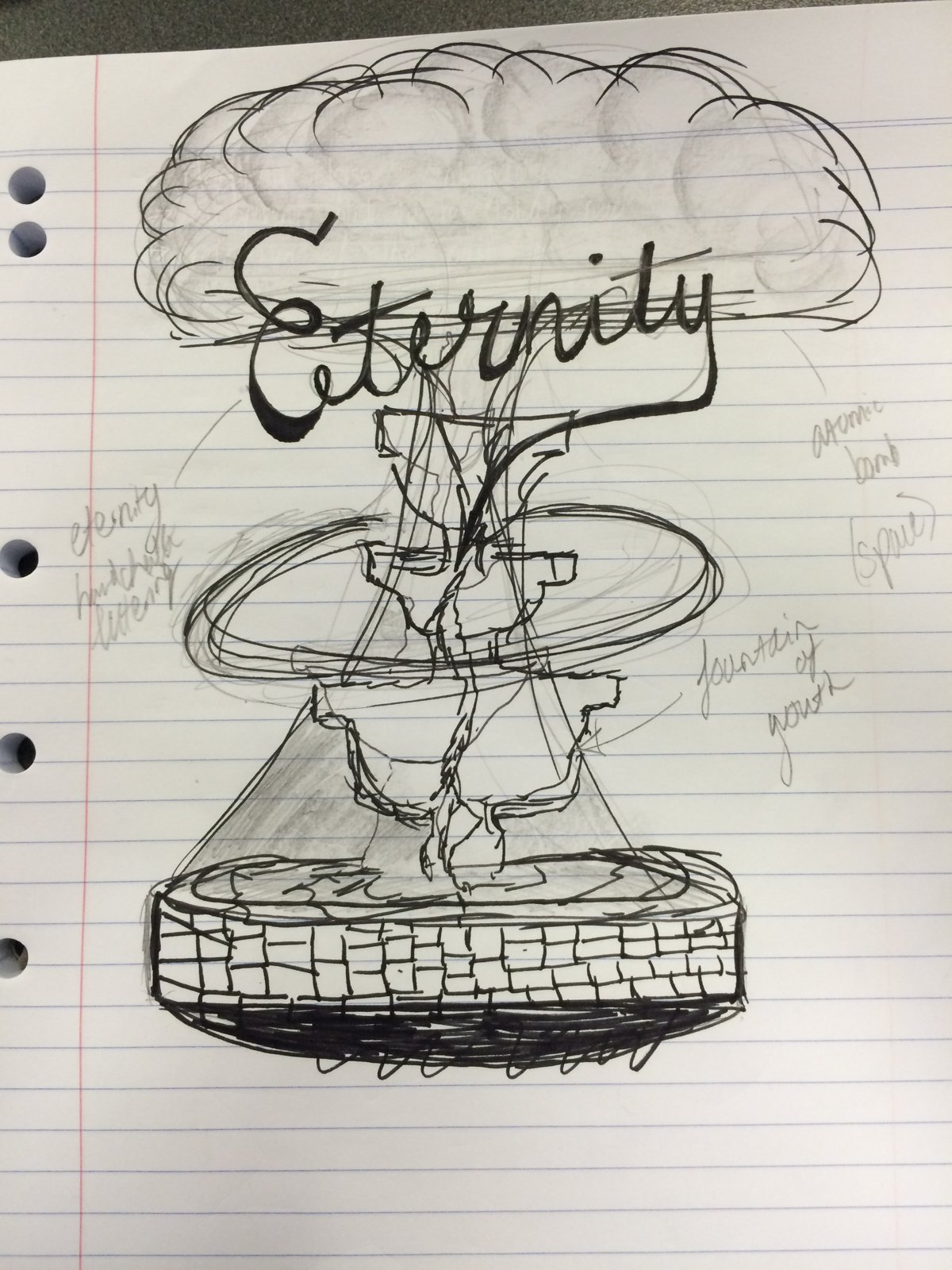
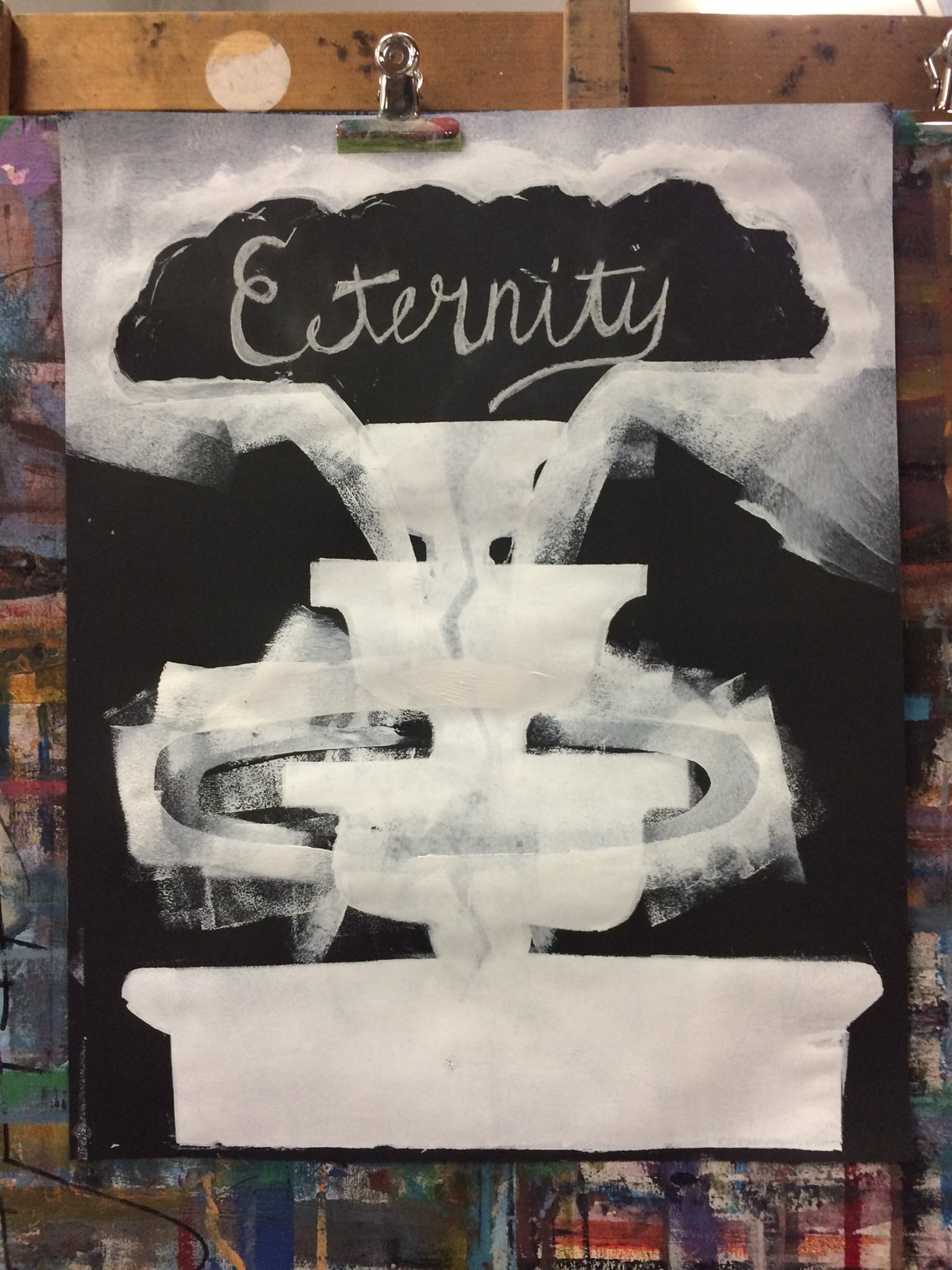
As inspiration for the Futurist Propaganda Poster, I drew from three sources. The first was Arthur Stace’s copperplate chalk ‘Eternity’ sign, which became the one word slogan of the imagined futurist movement behind the propaganda poster I was creating.
This photograph of the mushroom cloud aftermath of the Atomic Bombing of Hiroshima is both haunting and mesmerizing. The first bombing of its kind, this photograph represents a milestone in the history of humanity and violence of destruction, from which there is no return.
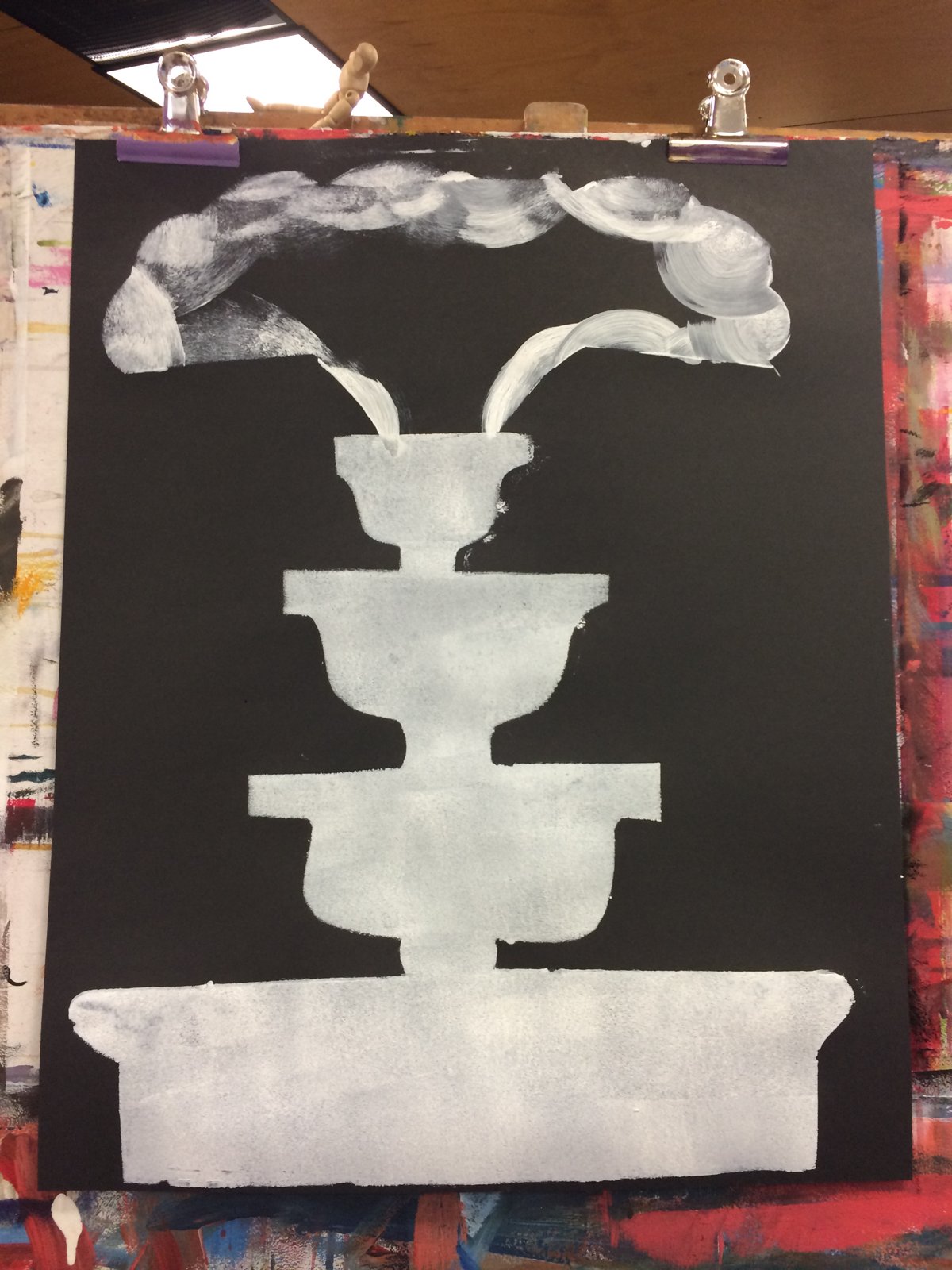
Combining all of these elements together lead to an interesting symbolic and logistical challenge in print form. I completed multiple drafts when figuring out layers and perspective.
My hopes for the work that it would invoke the question; What happens if the Futurists were to destroy the Fountain of Youth (as a symbol of classicism) in the name of ‘Eternity’? What greater ironic symbol for the fragility of their movement, that aims to avoid their own mortality, which is inevitable, and through their actions only make it more omnipresent in their lives.
Dada collages
My Dada Collages were constructed from magazine cutouts. On the left you see John Lennon making a comment, adorned with a trilby hat, donut ear phone, butterfly bowtie and ballerina body; posing the question, where is the line between art and life?
On the right, my work entitled ‘the chicken dance’. The background images are intended to emulate wallpaper, giving the world eyes and ears to witness the domestic scene of a façade shrouded man dancing with his wife in the domestic setting of his living room, alluded to by the lamp/ chandelier, and the absurdity of domesticity.
Images for this piece are not online yet.
Surrealist image
To create my Surrealist Image I drew from two artists, Magritte and Jiye.
Magritte’s painting of ‘The Lovers’ comments on intimacy and authenticity, creating an air of mystery owing to what we don’t see.
Jiye’s paining, paradoxically, is inherently exposing whilst also being excruciating.
I combined these two works to create a composition that would toe the line between façade and exposition of the truth.
I began by creating my drawing, emulating Magritte’s painting in the background and subject in the foreground, and Jiye’s in the portrait.
In my finished work, the image on the wall can be interpreted as a mirror or alternately portrait hanging on the wall. Either way, it is clear the man sees himself in the image reflected back at him.
To quote the novel Life of Pi by Yann Martel, “I have nothing to say of my working life, only that a tie is a noose, and inverted though it is, it will hang a man nonetheless if he’s not careful.”
Images for this piece are not online yet.